Brief Constructivist History
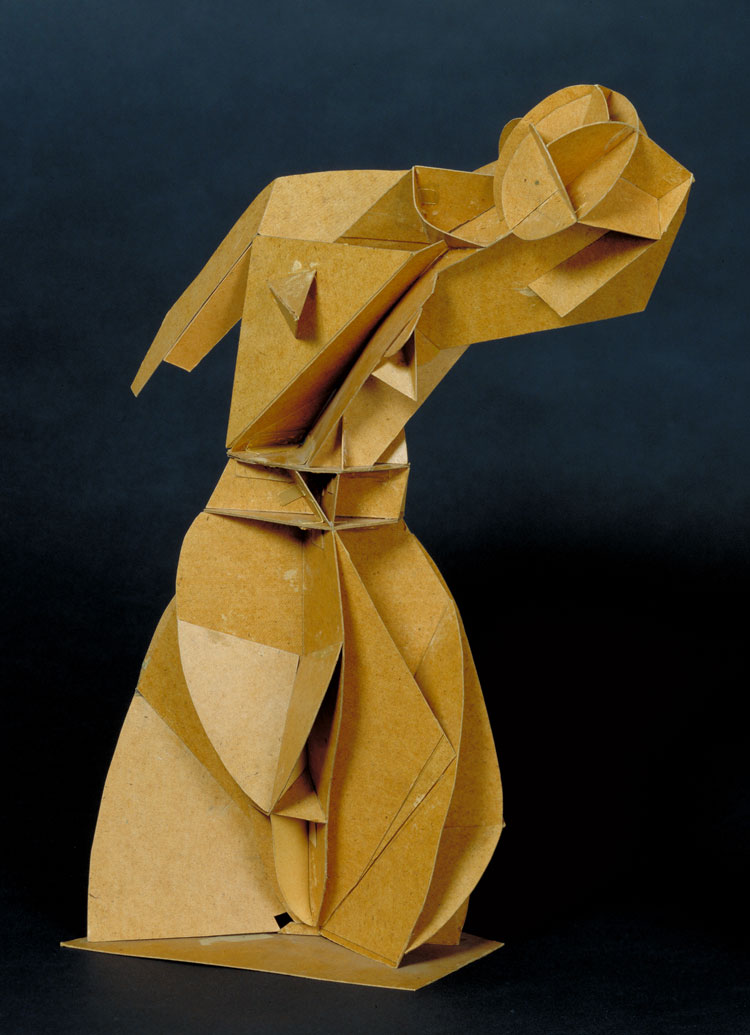
The Constructivist Movement of the early 20th century, also known as Constructivism, influenced how 3D form was theorized and expressed. For the first time, sculpture was constructed entirely from discrete parts. Unlike the carved stone and cast bronze sculpture traditions of the past, these works of art were characterized by their planes, lines, edges, transparency, openness, light weight, and angularity. They defined large volumes with minimal mass.
Constructivism began parallel to the Bolshevik revolution in Russia, and was supportive of the propaganda machine attempting to depict this revolution as a peaceful new beginning for humankind. The artists were idealists who were tired of the death and destruction of The Great War. They believed that through modern industry, life would be peaceful and better for everyone. History shows how that actually worked out, as the Bolsheviks all but destroyed avant-garde art in Russia.
Creatives in every discipline worked in this movement. Constructivists included graphic artists, industrial designers, architects, sculptors, painters and set designers. In many cases, they wore multiple hats and combined their expertise across disciplines. Buildings, monuments, abstract forms, portraiture, busts, and figures featured prominently as subjects.
Constructing a work rather than sculpting it allowed artists to experiment with elements or shapes and to adjust them as they went. This also allowed the artists to minimize the use of materials. A style typical to this movement was geometric, both planar and curvilinear. Sculptures were primarily constructed from readily available industrial materials such as sheet metal, cardboard, plywood, wire, expanded metals, string, rope, and plastics. Connection methods included rivets, welds, tabs, and glues appropriate to the material. Though plastics were left clear, many of the pieces were painted or allowed to naturally patina.
For the purposes of our project, we are interested in the formal and technical aspects of Constructivism, and will be working with aluminum sheet metal and rivets.