Paper
Paper selection is crucial to creating a successful pop-up. The best papers are stiff enough to support the pop-up mechanisms and can withstand bending, creasing, and repeated handling. Depending on the scale of the piece, different weights of paper may be appropriate. For a very small book, a lighter paper may be sufficient, but for oversized pop-ups such as those made by Collette Fu, much sturdier material is required.
The five most important paper qualities you need to consider are:
- Weight/thickness
- Texture
- Color
- Longevity (archival)
- Folding quality
NOTE: Never construction paper! Construction paper is too flimsy, too textural, the colors are not light-fast so they fade in direct light, and it is not at all archival.
WEIGHT
80 LB, 216 GSM card stock or Bristol paper is great for pop-up creation. Heavier papers are difficult to crease, and lighter papers become flimsy and weak. Many papers in the 80 LB range are very close to 10 points in thickness.
So, what is paper weight?
-
GSM - Paper thickness is measured in several ways including weight, which can be confusing. The common way to measure paper in the metric system is GSM which stands for grams per square meter (the weight in grams of one square meter of paper). Many printmaking papers are in the range of 180-300 GSM, meaning that some will be similar in weight to Bristol or card stock, but due to the nature of its construction is not typically stiff or suitable for folding repeatedly.
-
Pounds - When paper is measured in pounds, 500 sheets of a particular paper is weighed. Common printer paper is typically around 20lbs, while the Neenah Bristol Vellum is 80lbs. Most paper between 50lbs and 100lbs will be suitable for this project, so long as their surfaces are smooth enough. If you have a variety of different paper weights, just be sure that the paper at the base is heavier than the paper of the mechanisms built off of it, otherwise things might tear.
POINTS
Paper, especially card stocks, can be measured in points out of 1000, where each point represents 1/1000 of an inch, so 12pt paper would be 0.012 inches thick. The 80lb Neenah Bristol Vellum mentioned on this page measures precisely 1/100th of an inch thick, or 0.01", or 10 points. A caliper capable of measuring to 0.000" accuracy is needed to check paper thickness. Around 10-point paper thickness is good for pop-up mechanics because it is stiff enough to form structures and easy enough to crease.
TEXTURE
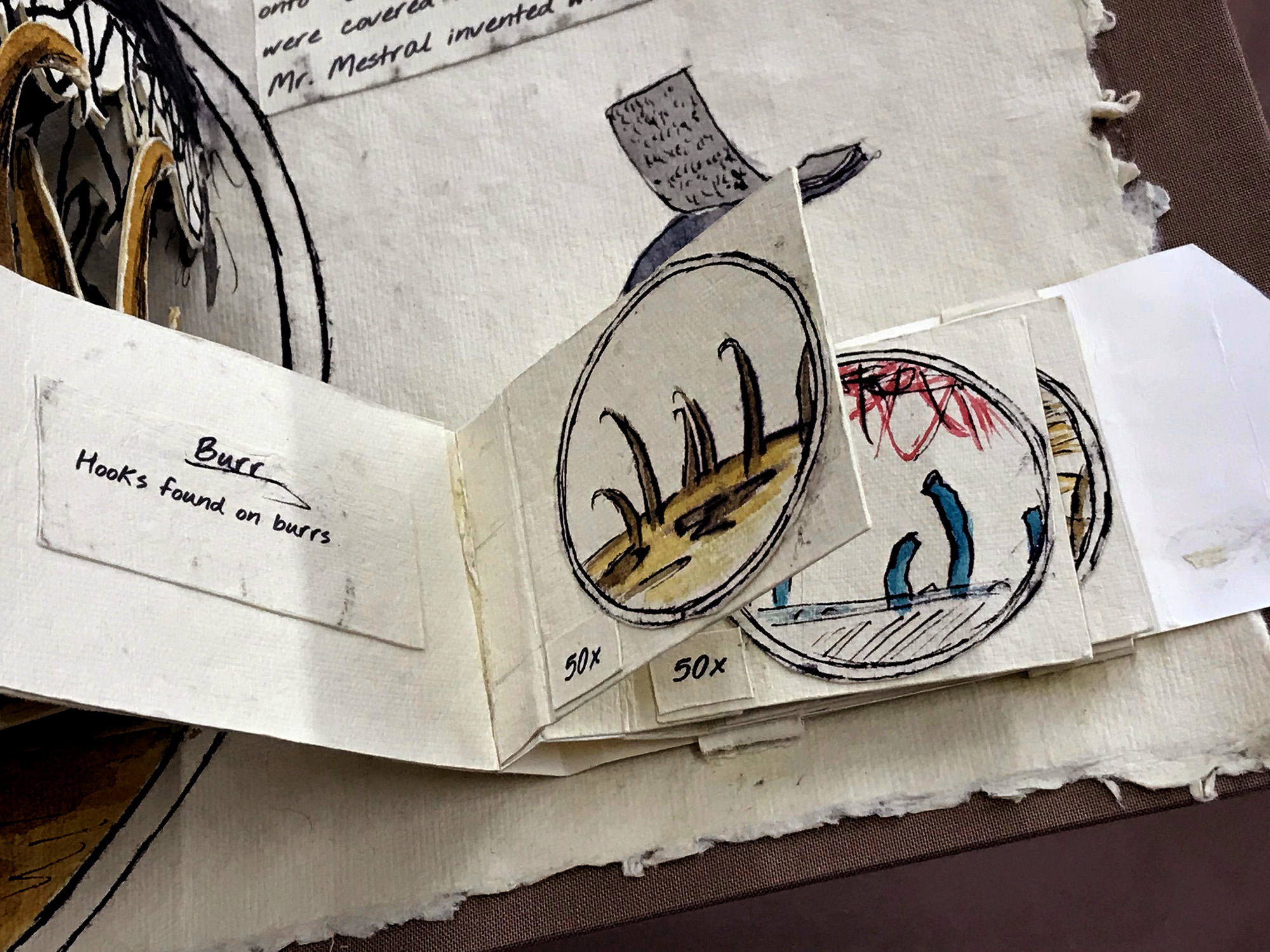
Very toothsome or fibrous paper will not stand up to repeated handling. They rapidly become dirty and begin to fray. Most pop-up books are made with slick paper, and professional books have glossy or matte coatings to protect the art. You may be familiar with cotton rag paper from printmaking, or cold press watercolor paper with beautiful decaled edges. These papers do not stand up well to the activity required of a pop-up. Below is a student example that ran into many problems due to the paper choice. The end result was beautiful and looked luxurious, but it was incredibly fragile. Note that the actual mechanism had to be made out of bristol paper (the bright white piece on the right side of the image), because the cotton rag paper had too much texture and the friction inhibited the functionality of his waterfall mechanism.
Artists who want to do watercolor illustrations need to choose watercolor-specific paper so that the pages don't warp. Art should be painted while the paper is taped down, and later cut into the shape of the mechanisms after it has dried thoroughly. Rather than buying the textural cold press watercolor with decaled edges, a thick hot press watercolor paper would be more suitable. Dense, smooth paper is best.
COLOR
The palette you choose for your book can change the entire mood, and you can convey a lot through color choice and silhouette. The course materials include as much white bristol paper as you can use, but we don't supply any fancy papers. You might choose to purchase colored paper like Astrobrights. cardstock pictured below.
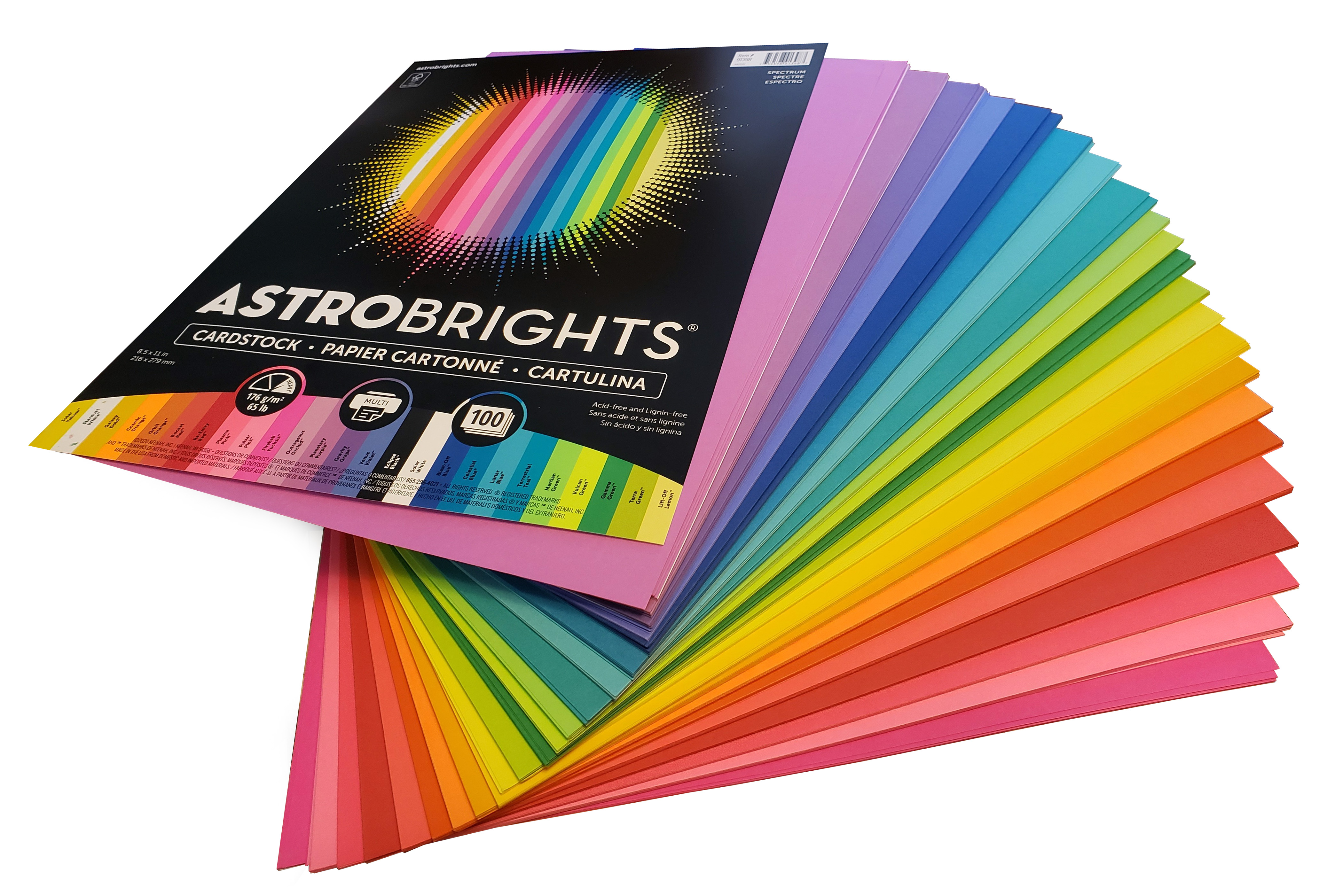
If you search for cardstock, you can find a variety of beautiful papers including ones that glitter, have patterns, or are metallic. If you choose to do collage-style art such as Shawn Sheehy uses in "Welcome to the Neighborwood", shown above, having a variety of cardstock at your disposal may be helpful.
Longevity (Archival)
If you want your project to last more than a couple decades, you need to work with archival materials. We discussed using archival glue earlier, but there is also archival paper. Check the packaging for terms like "acid-free," "lignin-free," and "archival" when you purchase paper. Anything that is meant to last should be labeled, and if it doesn't say any of those terms, it is probably not archival. Paper that has acid in it will degrade over time. This is why things like newsprint and construction paper are really cheap — they don't last. Ever notice how your trade paperbacks turn yellow and brittle over time? That is a result of acid and lignin in the paper.
Folding Quality
How well does your paper crease and fold back adn forth? If it is easy to crease and flex on the crease without cracking or delaminating then you have a good paper for pop-ups. This peoperty is not the same for all paper types and thicknesses. Testing is critical. Some papers, specifically for photography, are tough but do not crease well. Instead it may remain "sprung open" and is difficutl to flex back and forth. Others, such as certain thick watercolor papers start to delaninate or tear at the crease line, and soon begin to look very messy and lose its strength.
Your pop-up book will be a unique work of art. You should make it out of materials that will withstand sunlight and many years of handling.