Student Example, Eye Alignment Repair
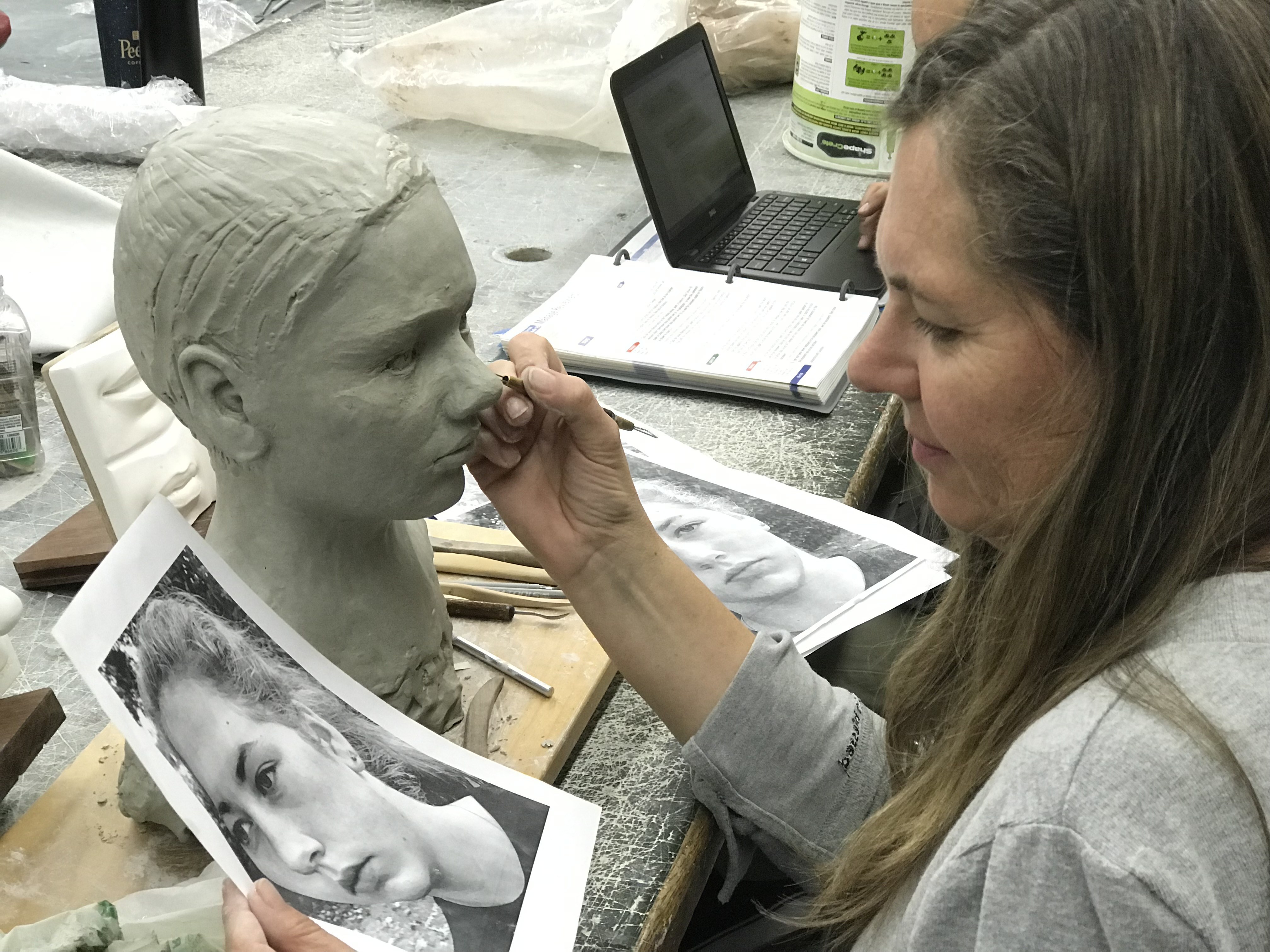
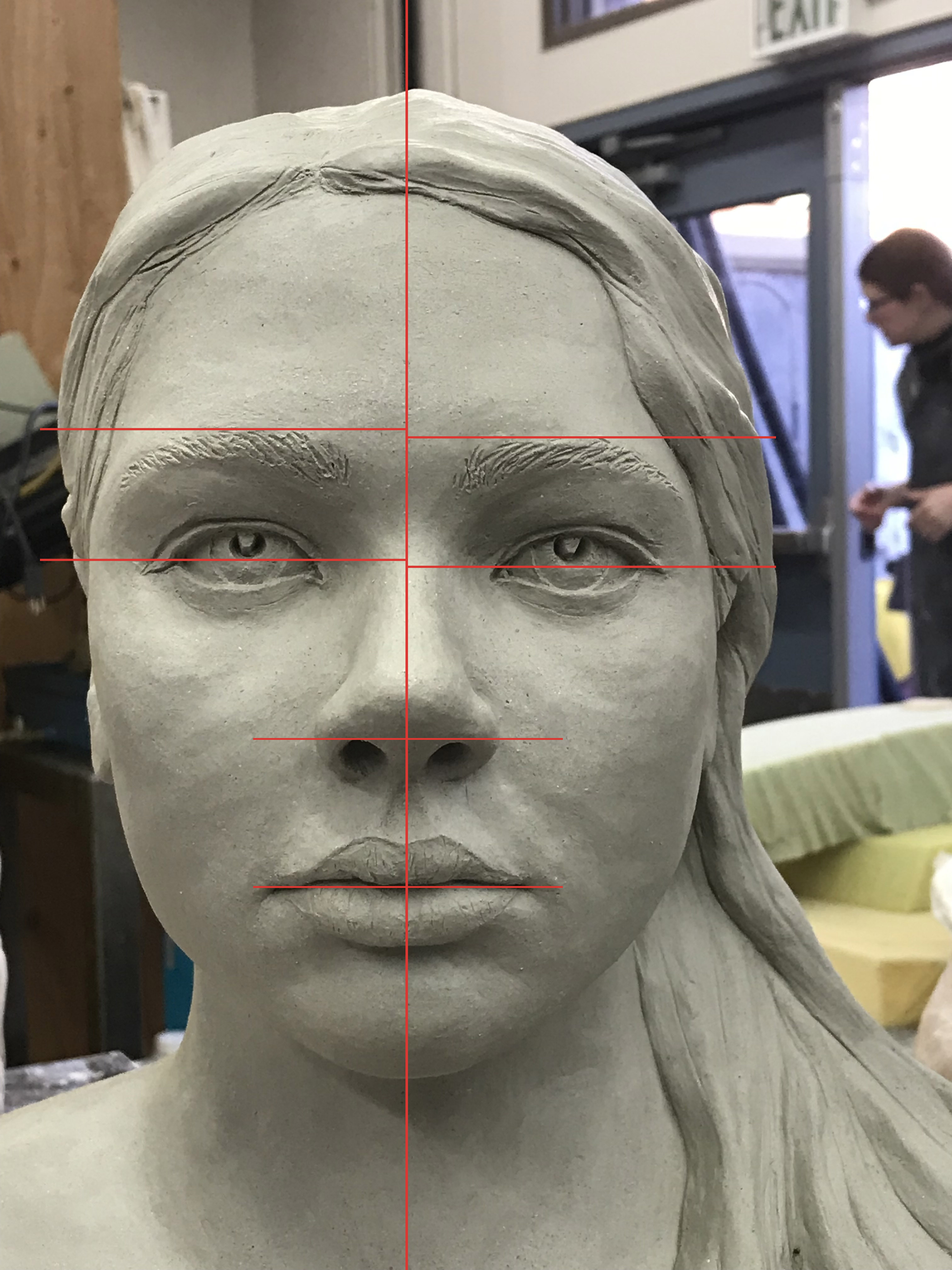
Here a fine example of a bust created by student, Sonia Rued in Beginning Sculpture. She relied on photos of her daughter as reference, as well as some in person observation. The execution was beautifully done, but one subtle problem became apparent as the piece was nearing completion. The eyes were out of alignment. It was determined that the right eye was the one to fix because eyes are typically centered between the bottom of the chin and the top of the head, and the left eye was.
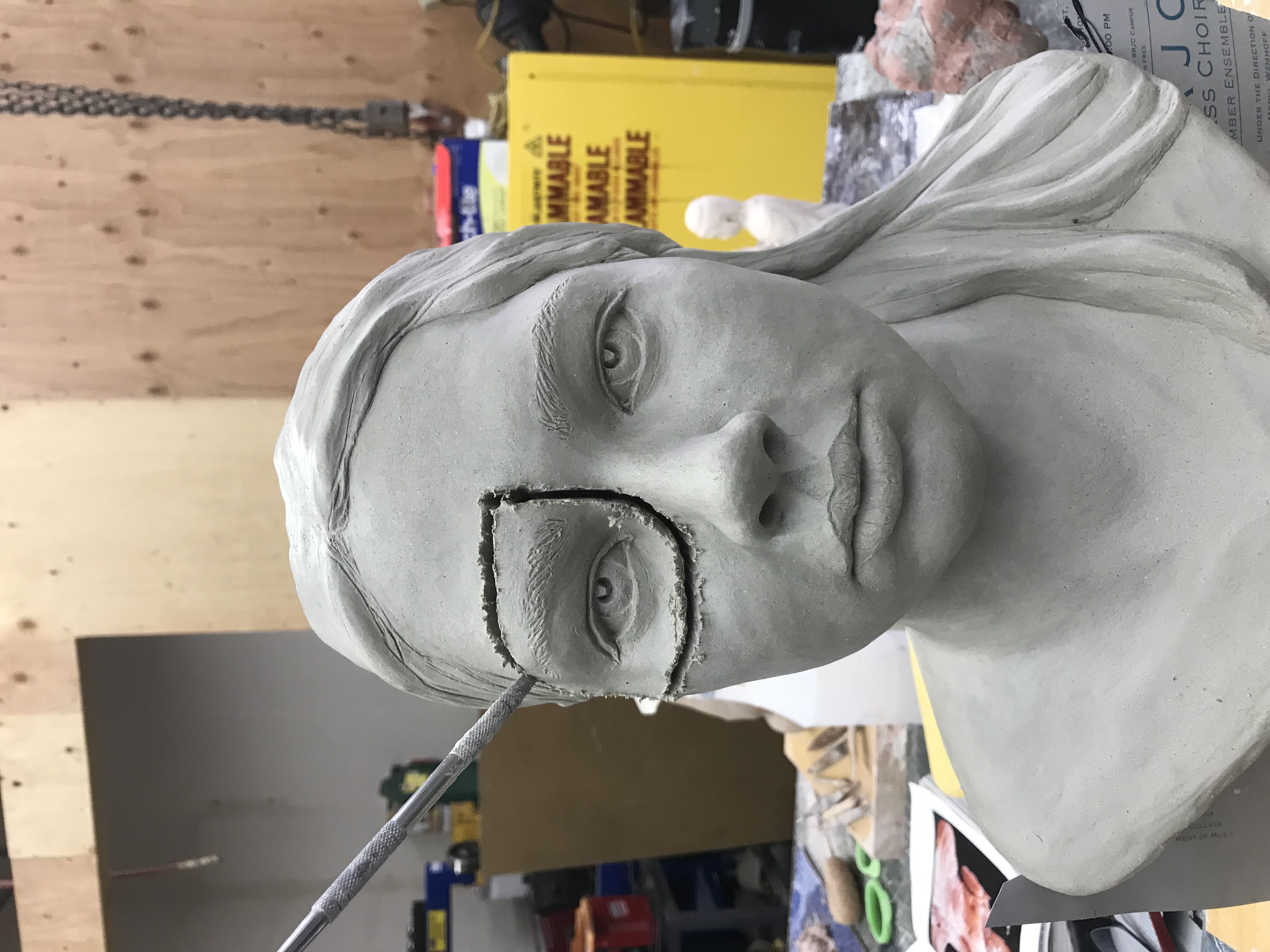
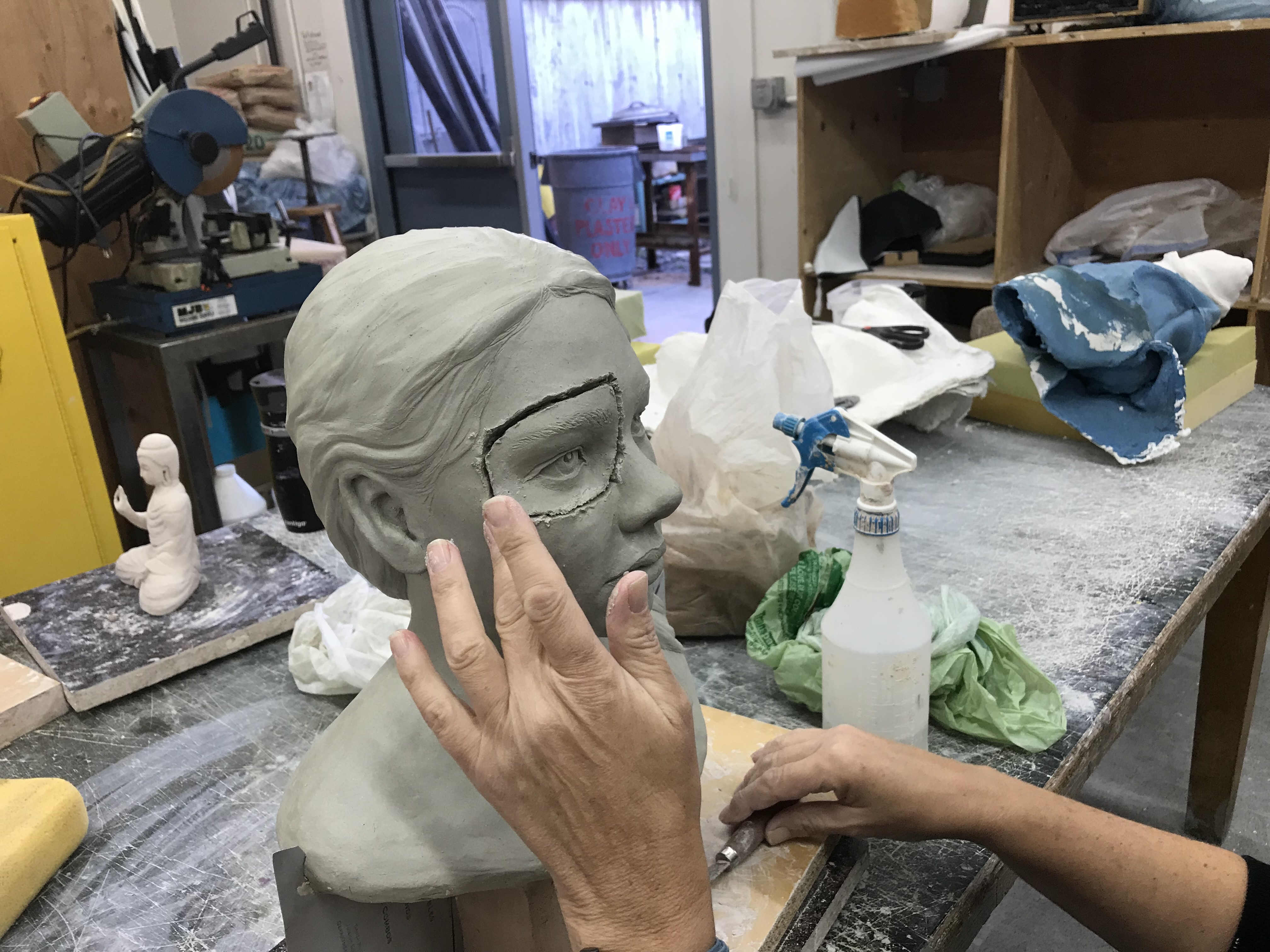
Although at first Sonia felt extremely intimidated to fix the problem, the repair was actually easy and quick. The key was to carve out the eye far enough away from the fine details that realignment and filling the cut area was straightforward. This piece was to be molded with silicone and then cast in a variety of media. It was not intended to be fired, so trapped air bubbles were not an issue. If this sculpture was intended to be fired, then care would have to be taken to not introduce enclosed cavities to the repair.
When a great amount of time and effort has been spent working on a sculpture it is sometimes difficult to take criticism. Sonia not only listened, she acted. As a result, her piece was quickly fixed.

What Caused the Issue?
Why was the eye out of alignment in the first place, especially when Sonia took such great care to notice the proportions and details in her daughter's face? Everyone has an innate left-right bias in their observation, and it takes study and practice to notice this in your own work. In the book, DRAWING ON THE RIGHT SIDE OF THE BRAIN, an exercise is offered that helps people notice their bias. There are two ways to do this: rotate the image upside-down so what is on the left is now on the right, or look at the image in the mirror. Both methods allow the artist to see a problem more easily because if they have a bias, such as always drawing the right eye a little bit big, crooked, or low, when they see it in reverse, the the distortion is exaggerated. Think of it this way; if you always make a circle on the right bigger than the one on the left while you believe they are the same size, by reversing their orientation the one that is now on the left (which is smaller than the one now on the right) will look doubly small to you.
Step-by-Step Repair



Cast in Cement

The bust was cast in both plaster and cement. One of the cement versions had some small air bubbles and other minor flaws, seen above. This version was left to the class for use as an example. The beauty of creating a quality, reusable silicone mold is that multiple copies can be produced; especially important if a casting comes out with problems. Overall the project was well done. The eyes are aligned, and the repair is not noticable.
The bubbles that are visible on the surface of the sculpture can be reduced or eliminated by careful mixing, pouring and vibration of the cement. Vibrating a mold is challenging, as it is a heavy object, and in the world of concrete work, there are special powerful tools used for the task. For sculpture casting there is a table that is made to vibrate an entire mold, such as these found at McMaster-Carr: https://www.mcmaster.com/products/vibrating-tables/.