The Eye
There is really no detail in a bust as important as the eye because this is the part of the individual that looks back at us and acknowledges our existence. Sculpting the eye is difficult and detailed, but working to understand its curves, volumes, and even function makes sculpting it easier.
"The eyes are windows to the soul." This phrase has been stated in many ways over the centuries by many writers, poets, and artists around the world who have discovered this feeling for themselves. My personal experience of this relates to looking very carefully into my brother's eyes when we were little. I freaked out because I thought I saw into his core being, and it was frightening; something I knew was beyond comprehension.
Sphere and Eyelids

One of the most essential aspects of the eye is that it is a sphere, and that all other supporting forms - the lid, eye socket, the muscles above and below the eye, the tear duct, and how the eyelids overlap and intersect, all relate to this spherical form. One must understand that the eyeball is inside of a socket in the skull that is designed to protect it. Knowing the boney form of the eye socket and cheek bone will help you define the areas surrounding the actual eye. All flesh and muscles are sitting atop this bony structure. The skull is a rigid, fixed scaffold that is implied by the outer surface of the skin. The eyeball itself is partially embedded, so most of the spherical form is hidden. It is critical to imply the continuous spherical volume as the eyeball disappears under the eye lids, and into the tear duct. In order for us to see - and move the eye in the socket - the eyeball is raised out of the socket just enough for full vision while still being protected by the brow.
Pupil and Iris

The part of the eye that brings the most life to a portrait is the iris/pupil. Because the actual eyeball contains a clear lens with muscles that manipulate the lens and pupil diameter, and the fact that clay is an opaque homogeneous material, it is necessary to create the illusion of color and transparency in these details. Out of all details in a bust, the most unlike the real living form is the eye. By carving back in space, the shadows of this cavity creates a convincing volume and color to the eye, persuading us that the person who is looking back at us has an eye color.
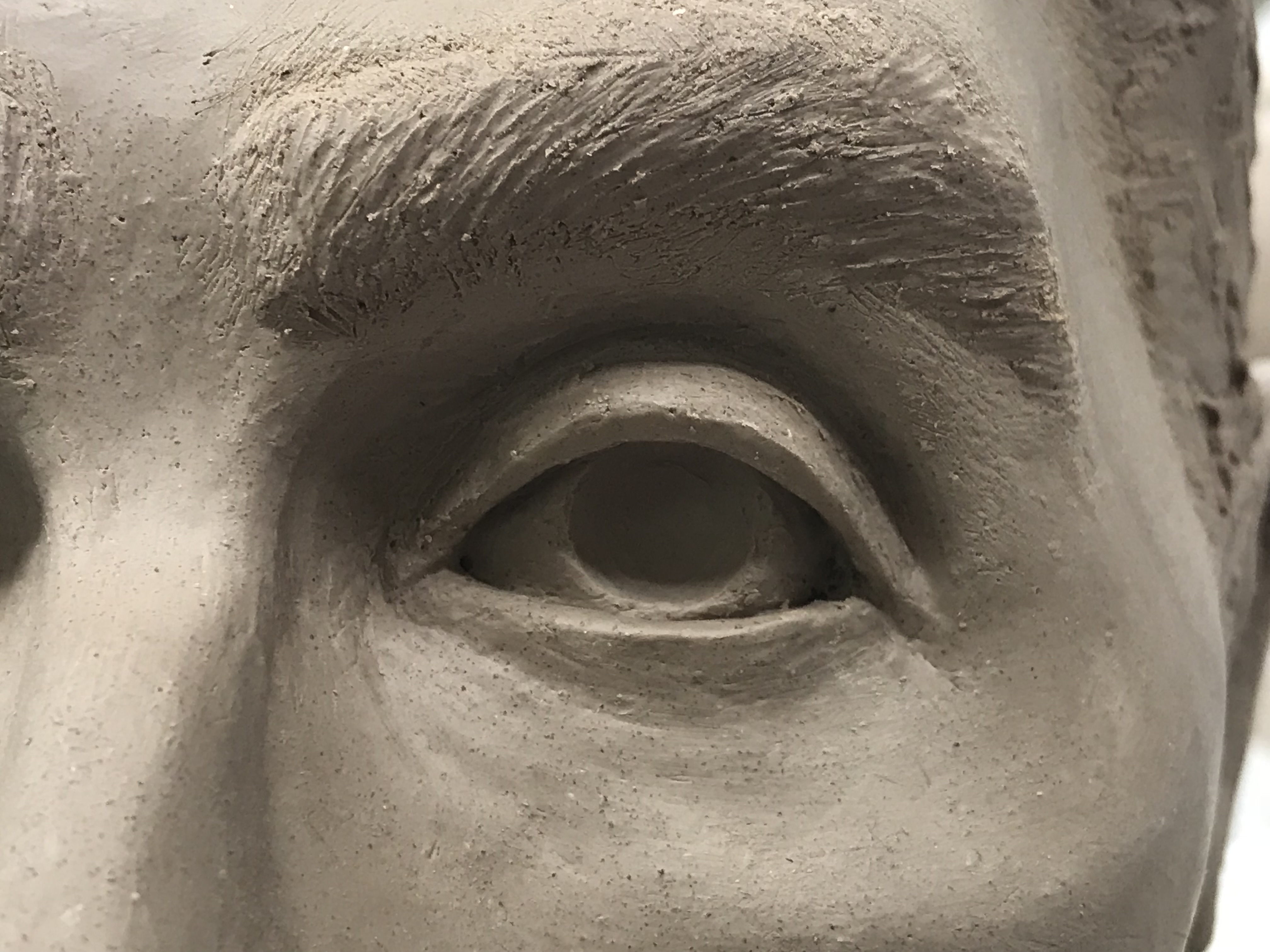
A very dark eye may be sculpted with no iris at all; instead a large, deep pupil encompassing the iris is made. This is demonstrated in the first image on this page. Light irises can be depicted by a shallow carved ring around the deep pupil as seen in the image on the left, above. Any depth between shallow and deep can be created, giving the illusion of color.
Roundness of the iris and pupil is very important because it is a detail that is noticed very easily. If it is out of round by even a little, viewers will know. This is a result of our brain's incredible power of observation dedicated to recognizing the subtle differences between people. A large part of our brain is dedicated to facial recognition.
Specular Highlight

A specular highlight, or glint, can also add realism to the eye. This is a raised detail in the upper part of the eye that is contoured to resemble a reflection on a wet, shiny sphere. The shape of this highlight gives a clue as to the environment that the subject is posing in. This detail needs to be framed by shadow to become effective. When a small light area is surrounded by darkness, it will appear lighter in comparison to other light areas than it really is. This is a useful optical illusion.
Direction
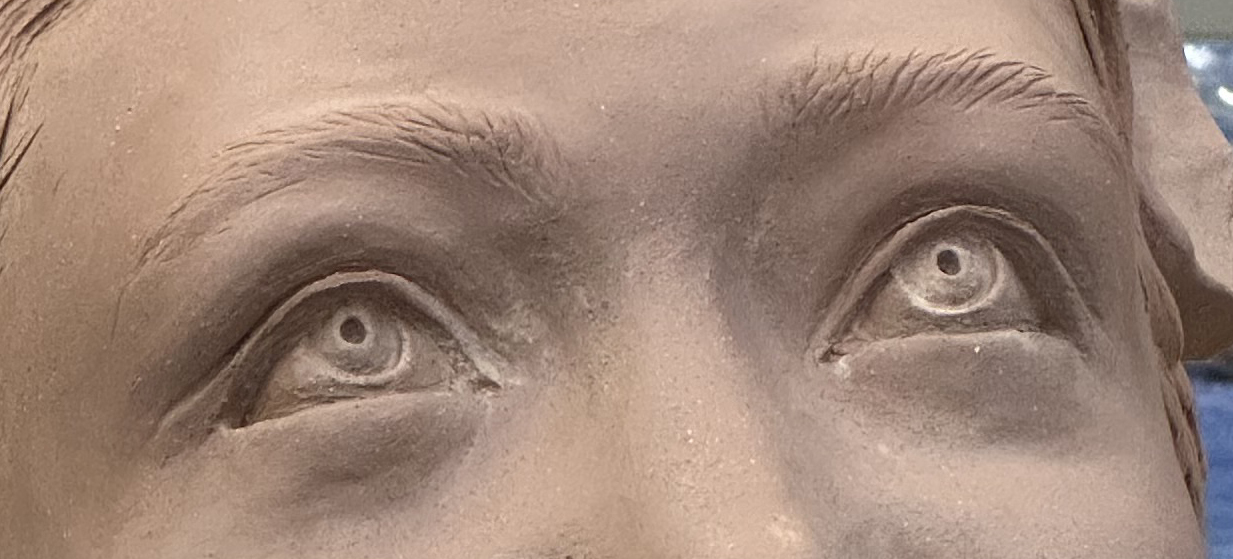
The position of the iris and pupil in the eye socket tells us if a person is glancing left or right, or looking up or down. It also tells us of the model's mood. A calm looking person's iris is slightly overlapped by the upper eyelid, and the bottom of the iris is close to the bottom eyelid. If the upper part of the iris is completely visible, the model is expressing strong emotional response, such as fear, surprise or excitement. Pupil diameter also expresses emotion, or simply the light level in the room.
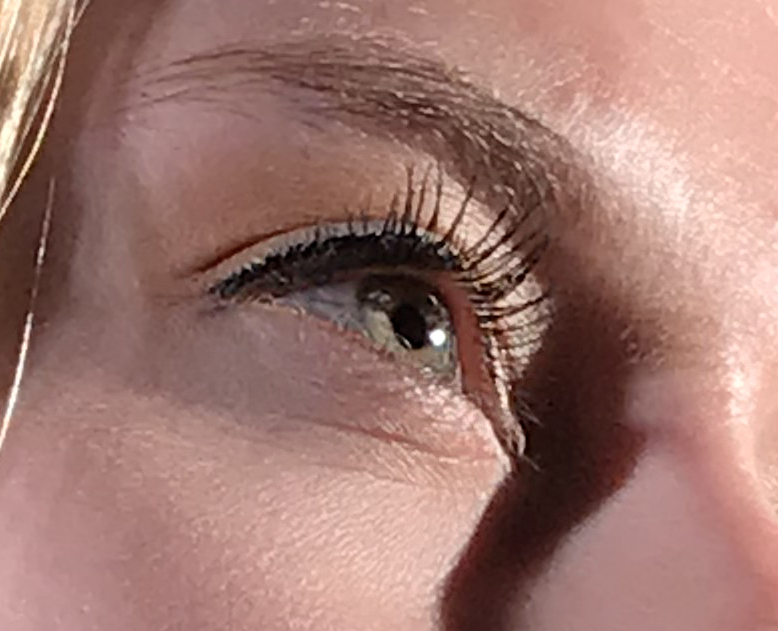
In the image, above, the model is looking up happily. The lighting is bright, so her pupils are tiny. Her irises are implied as light blue because they are carved shallow. Notice the flesh of the upper eye lids and how they fill the space all the way to the bony brow. The eyebrows are curved by the facial movement of looking up. The model is youthful, which is indicated by the smoothness of her shin and lack of wrinkles.
Eyebrows and Eyelashes

Notice that all of the images on this page depict eyebrows. Some are sculpted simply by making indentations in the clay, while others are volumetric and raised above the flesh. Eyebrows are important features of a face, and must be taken into account. The direction of hairs and their overall border reference the color, density, and expression of the model. Sometimes there are no individual hairs depicted, and at other times lots. Eyebrows indicate all manner of expression. Study the angles of hair movement, their bushiness, and coverage on the brow. Curves or angularity of the overall eyebrow are powerful indicators of emotion and individuality.
Eyelashes are quite difficult to depict because they are delicate and thin. In general, they are not typically sculpted; however, in the photo above, there are delicate hints of eyelashes on the right.
Examples of Real Eyes
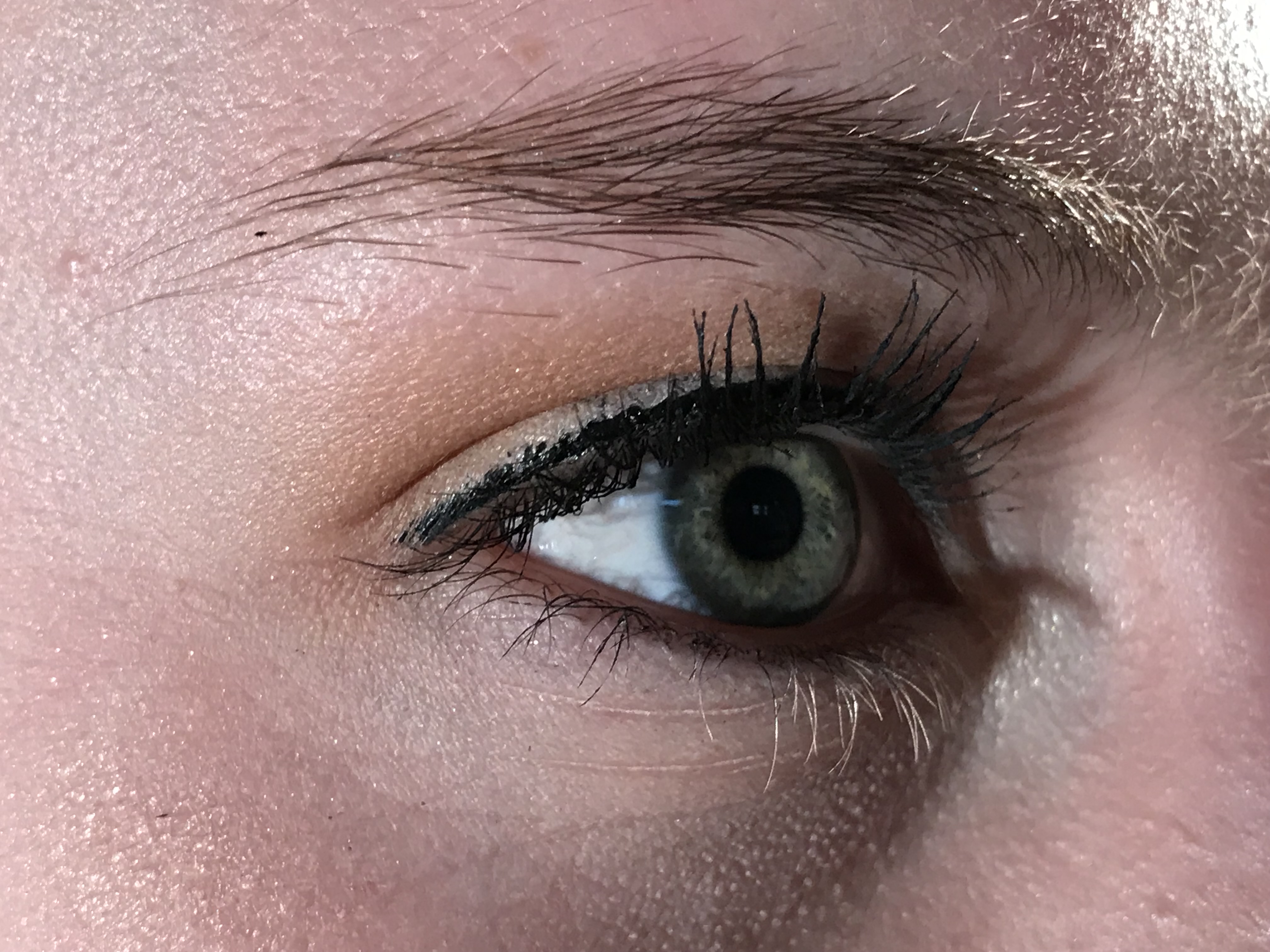
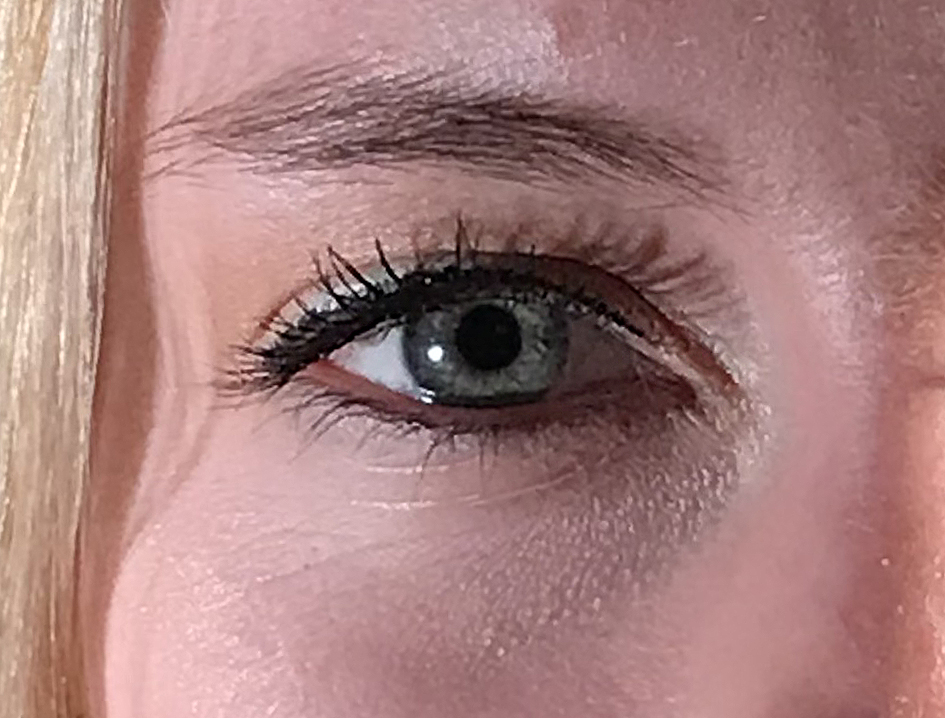
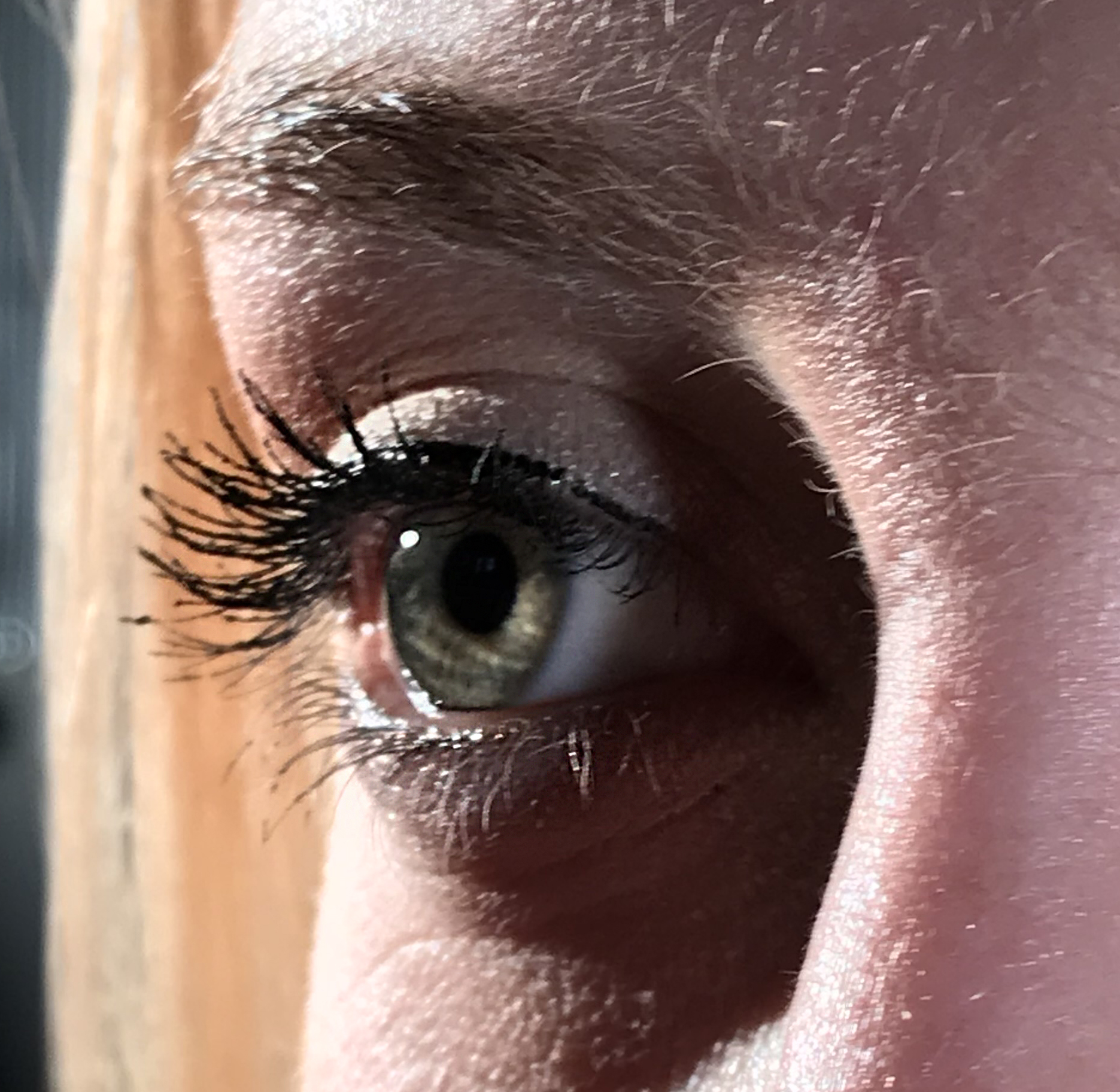
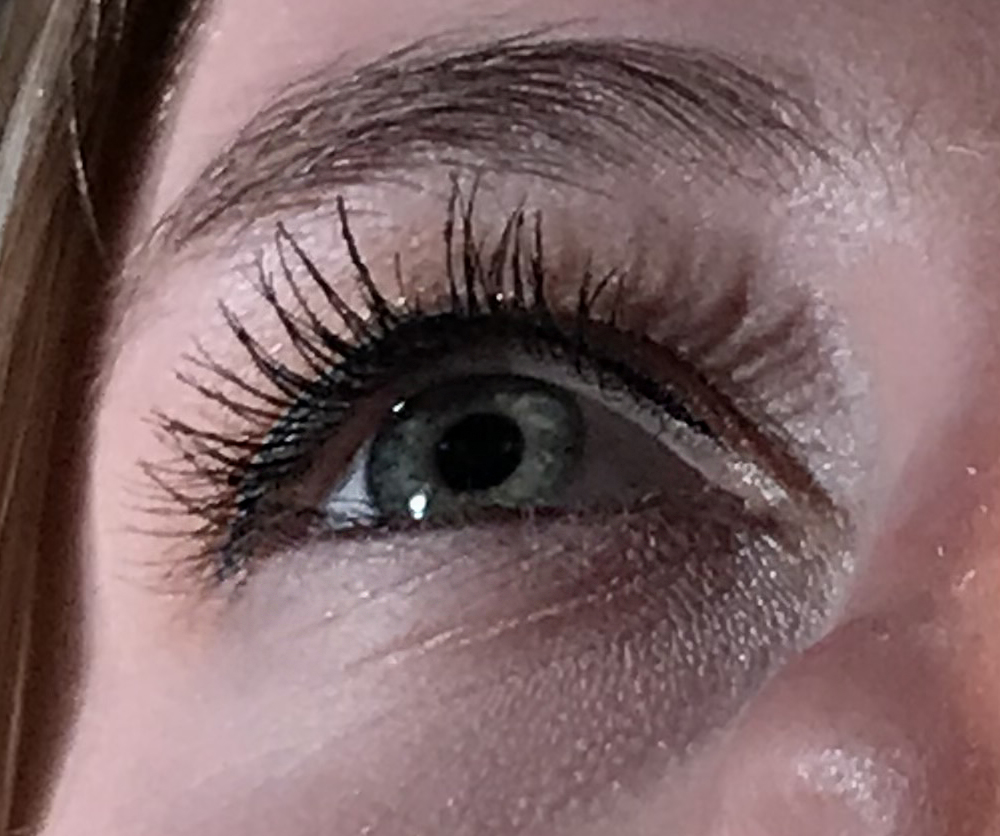
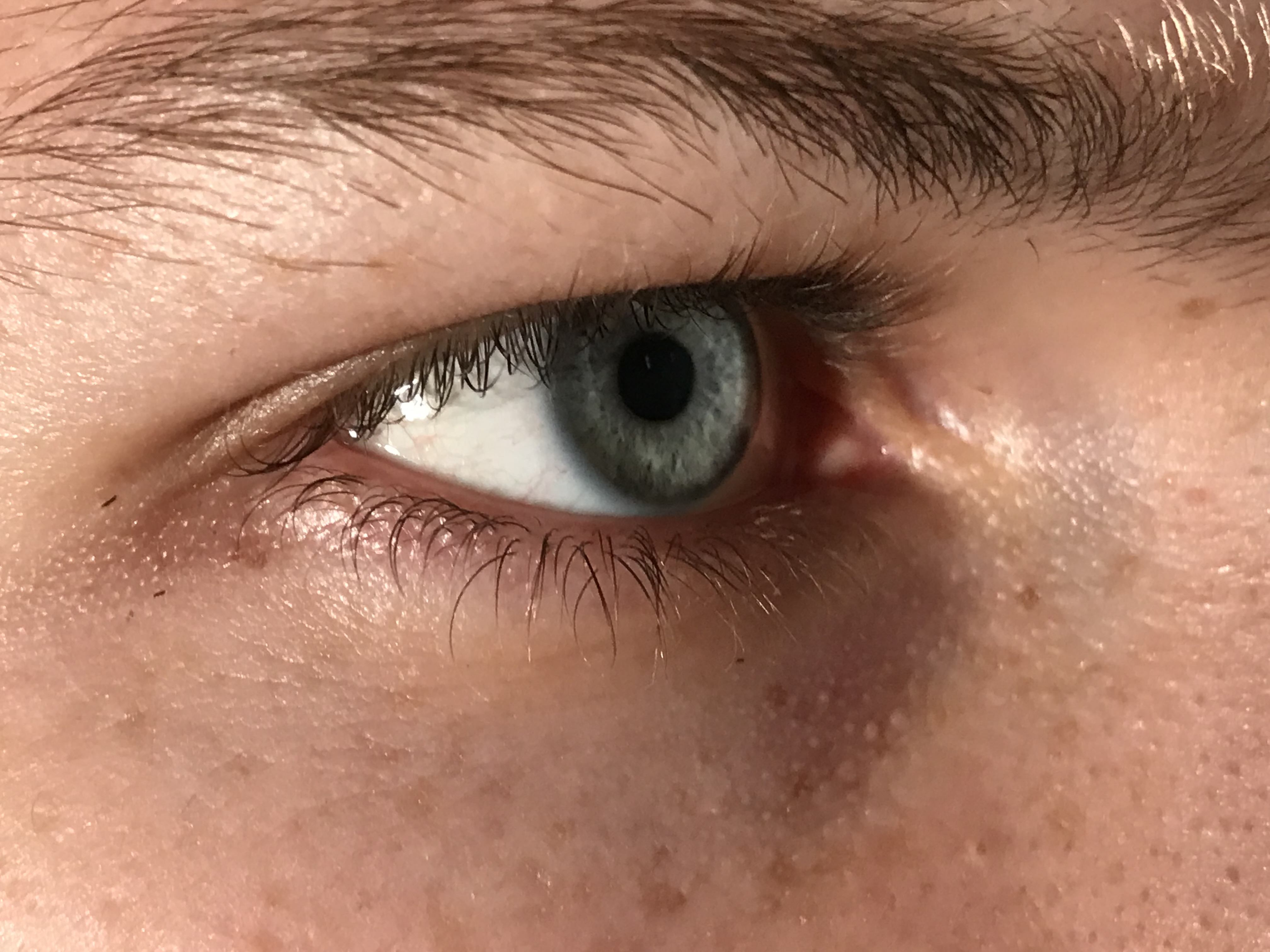
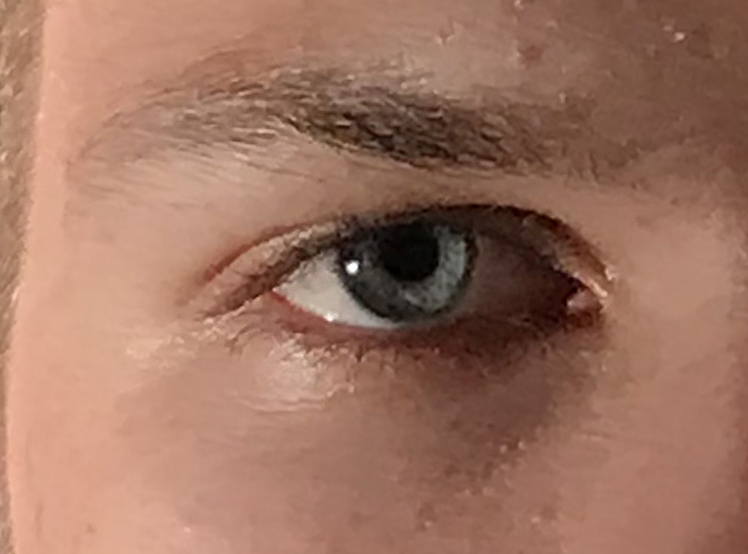
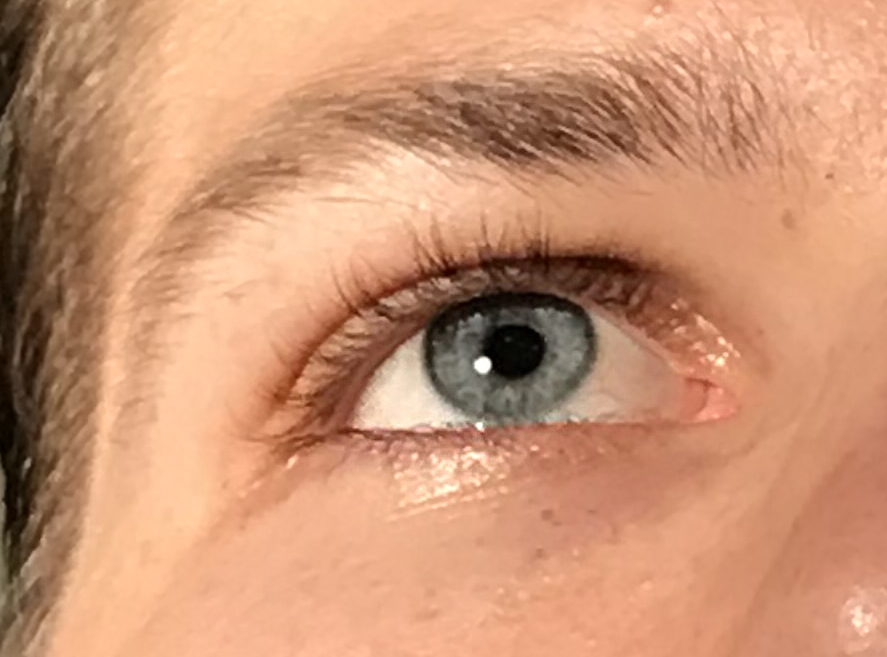
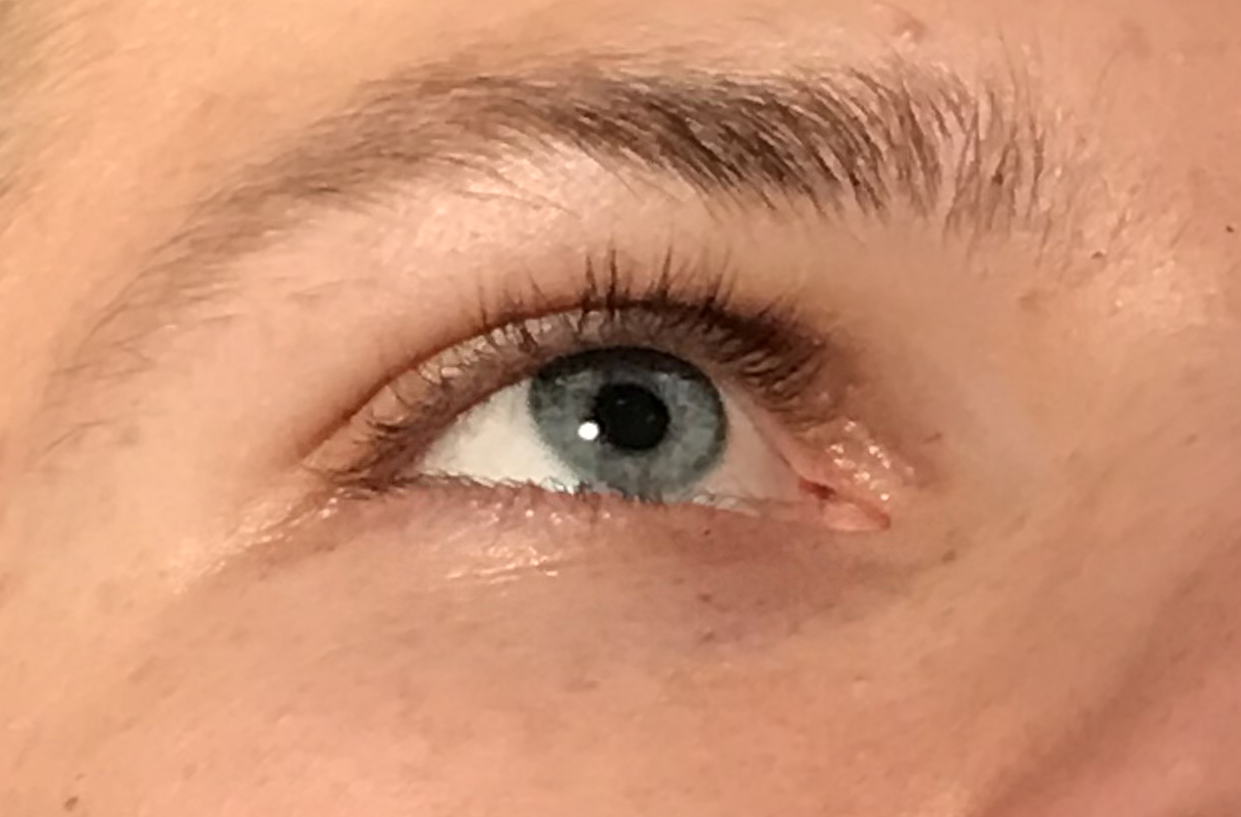
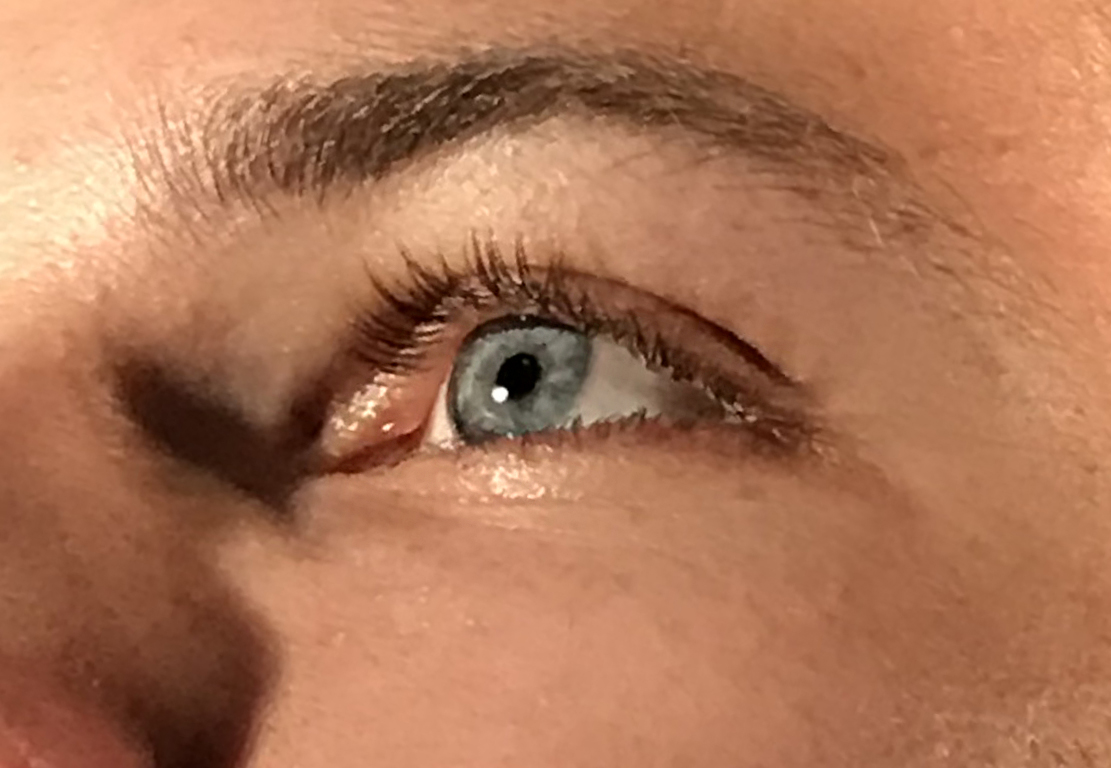
Below are photos of two students' eyes. Study how they differ, even though the general anatomy is the same. Sculpting these eyes requires careful observation of the unique volumes, folds, intersections, color tones, and proportions describing their individuality.