Cobweb Mechanism
This vintage mechanism has a long, interesting history. Below, read an excerpt from the article Valentine's Day and the Romance of Cobwebs by Nancy Rosin.
"Cobwebs—also known as beehives, flower cages, or birdcages—are a rare example of a mechanical or movable valentine consisting of a minimum of two layers of paper. First, a web or cage would be cut from a piece of paper by making a pattern of concentric circles, leaving attachment points at regular intervals. In the center of the spiral, a delicate thread would be attached and its outer edges would be pasted directly on top of a second sheet on which an image or message would be written, painted, or printed."
For instructions on how to make a cobweb, scroll down to "Directions: Build the Top Layer" on this page: https://chibitronics.com/how-to/reed-switches-part-2/ . Note that the example below is cut from tissue paper which makes it open easily, whereas the heavier weight paper in the chibitronics tutorial is much stiffer. When incorporating electronics, a sturdier material makes sense, because although the tissue paper is elegant, it is also quite delicate.
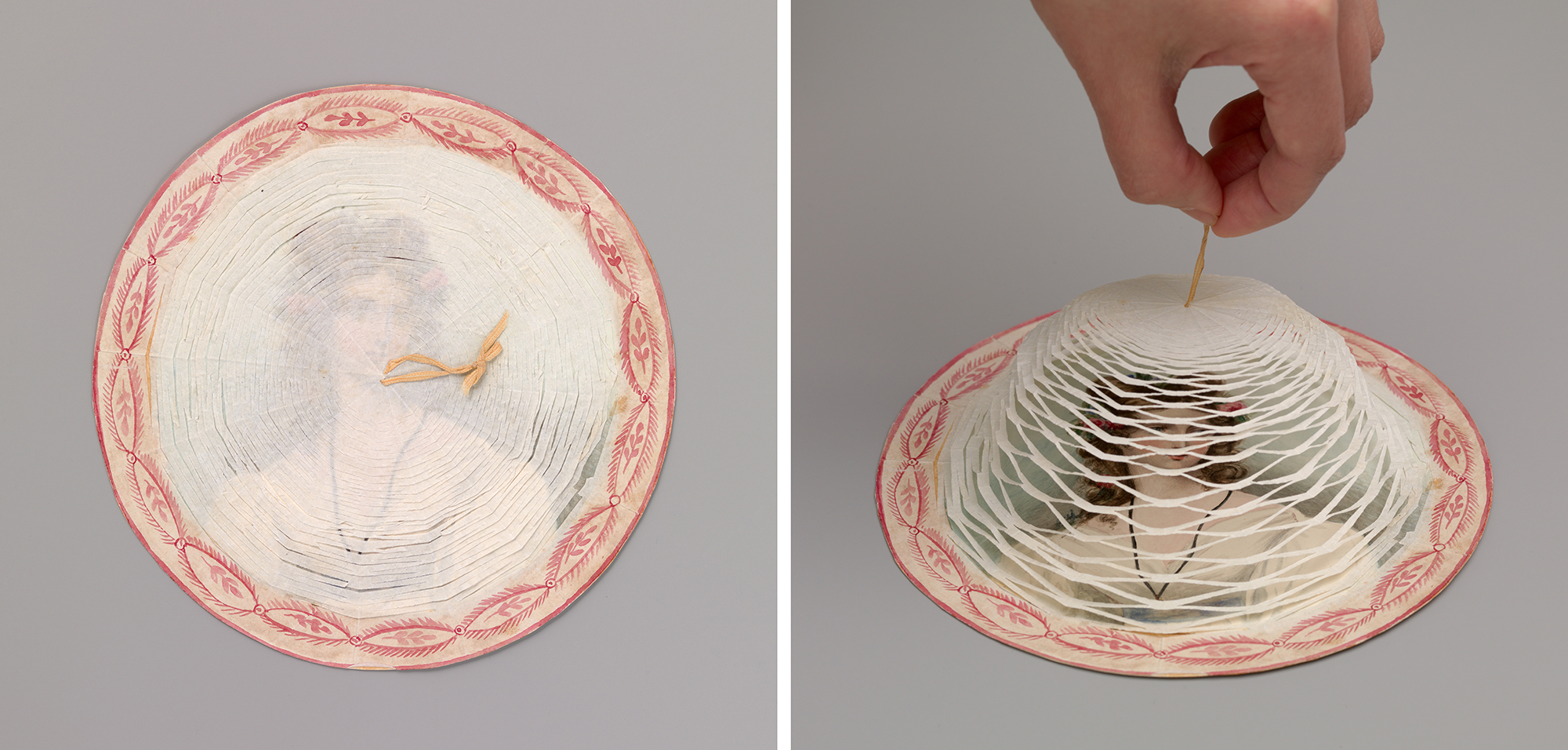
Cobweb valentine, 1830–40. Watercolor, cut tissue on board, Diameter: 6 1/2 in. (16.5 cm). The Metropolitan Museum of Art, New York.
Double Cobwebs
As with any pop-up mechanism, there are innumerable variations and combinations you can do. Here are two variations of double cobwebs you might try.
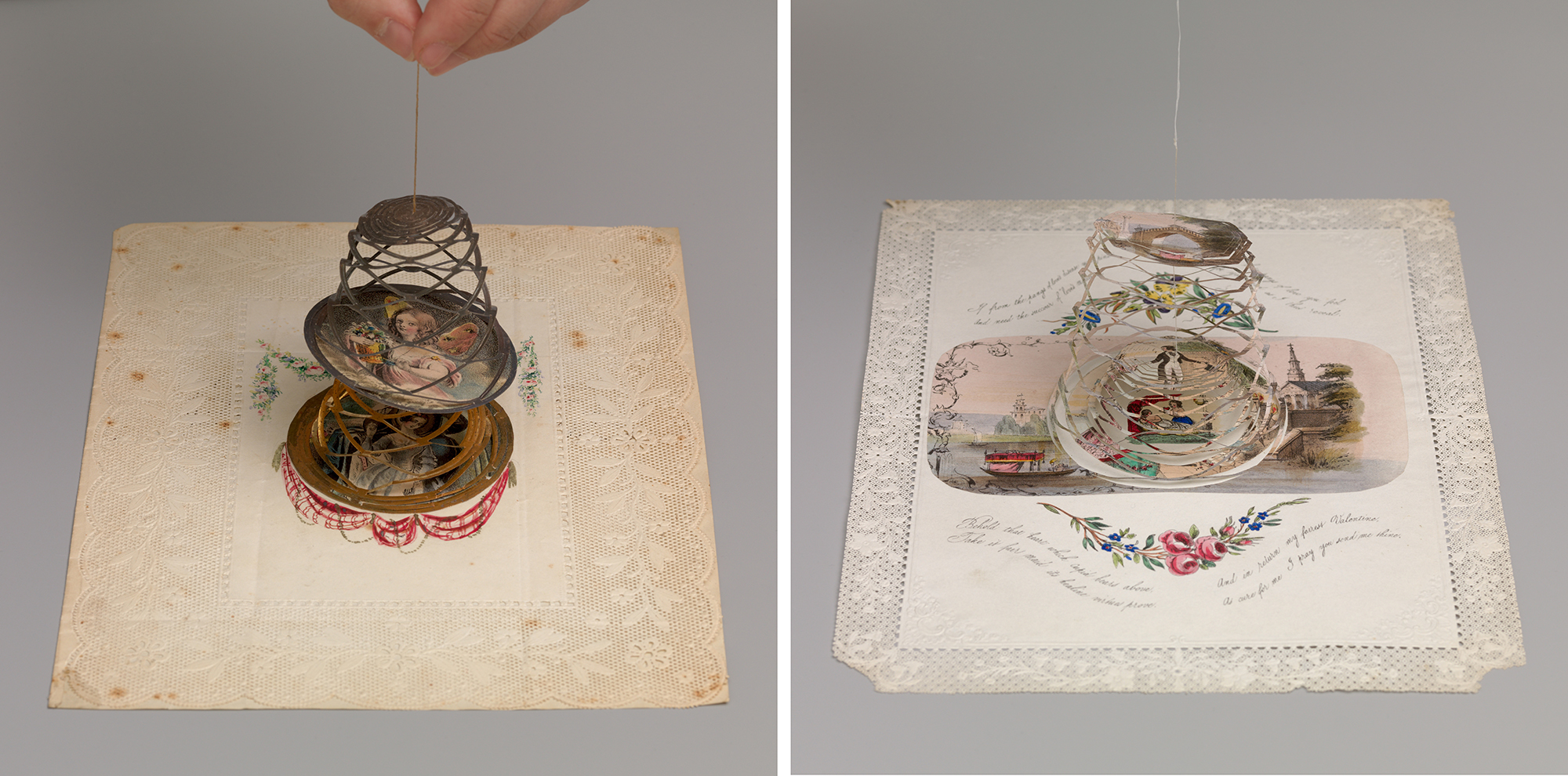
Watercolor, pen and brown ink on cameo-embossed paper, Anonymous, British, 19th century British. Photo courtesy of The Metropolitan Museum of Art, New York.