Pop-Up Book Introduction
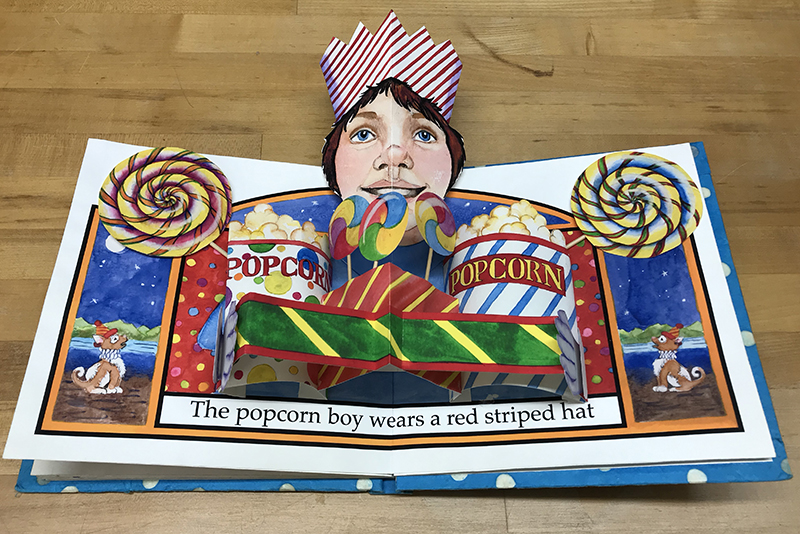
Above is spread five of NIGHT CIRCUS, copyright Katherine Fell, student of Art 5 in 2003. Katherine's artwork was originally created flat, using watercolor on paper. The images were digitally scanned. Text and solid black lines were added in photo editing software prior to printing. Finally, the printed sheets were hand-cut, glued together, and bound into a book. Because of her process, Katherine was able to make several copies of her book.
The Pop-Up Book Project is an exercise in aesthetics, sculptural thinking, mechanical engineering, and storytelling. It is a complex project involving many distinct areas of problem-solving. You will be shown many professional pop up book examples, student book examples, and reference books on paper engineering. Lectures will include basic mechanisms, paper assembly methods, specialized book binding, developing a storyline, drawing a storyboard, visual composition considerations, integration of text, and cohesiveness throughout the book.
Your pop-up book can be a beautiful portfolio-quality object that demonstrates your technical and artistic prowess. This project has been known to play a key factor in some students' acceptance into graduate school. Some have used their books to further their career goals in other ways as well. And on occasion, a book is so good, it ought to be published.
The results above rely on a high standard of accomplishment. You are expected to do the best you can with the allotted time and available resources. Hard work is necessary in order to achieve a good result, and the reward ultimately goes far beyond a good grade.
Before creating a storyline and storyboard (and ultimately your formal book), you will be producing a set of unique mechanical test samples which demonstrate underlying paper engineering concepts. These are not part of the actual book, and must be completed prior to creating your storyline/storyboard.
Once your storyline and storyboard are approved, you will begin work on the actual unbound spreads. This entails making original artwork, seamlessly integrated into functional mechanics. If you wish to include text, it too must become an aesthetic element in your composition. Though each spread is an individual work of art and design, the overall book must form a cohesive whole. Your book is complete when bound to professional standards, as demonstrated.